The Forgotten Art of Discourse
In October 2014, the Metropolitan Opera in New York City staged The Death of Klinghoffer, which dramatizes the 1985 hijacking of the cruise ship Achille Lauro and the murder of passenger Leon Klinghoffer. Confined to a wheelchair and suffering from ill health, Klinghoffer was shot in the head and thrown overboard by members of the Palestine Liberation Front. Originally produced in 1991, the critically acclaimed opera had been staged globally with little controversy. Yet in one of the most culturally sophisticated cities in the world –– the sh*t hit the fan.
Protesters, many of whom had not even seen the opera, demanded that the Met cancel the production. According to the New York Times, one protester labeled the baritone a fascist and Peter Gelb, the Mets general manager, received death threats. Another malcontent called for the set to be burned to the ground. Abraham Foxman, director of the Anti-Defamation League, a prominent Jewish organization, insisted that the opera was not anti-Semitic and praised the Met. He received vitriolic emails, one which labeled him a “kapo,” an insult referring to a Jewish inmate who oversaw fellow Jews in concentration camps.
The histrionics surrounding the Met affair brought to mind an ironic yet analogous uproar involving artist Zbigniew Libera and his mixed-media work LEGO Concentration Camp. At first glance, the seven-piece box set appeared nearly identical to those produced by The Lego Group, even featuring the brand’s signature red-and-white logo. But the box covers depicted how Libera had turned the innocuous plastic bricks into scenes from Nazi concentration camps, including the mistreatment of prisoners and gas chambers. Exhibited in 2002 at the Jewish Museum in New York City as part of a show titled Mirroring Evil: Nazi Imagery/Recent Art, Libera’s absurdist work provoked a torrent of rancor and unfavorable press, long before the rise of social media.
The LEGO Group, unnerved by the subject matter and backlash, urged Libera to withdraw the work from public view but eventually backed down. Polish officials also pressured the artist to decline an invitation to exhibit at the Venice Biennale, a prestigious opportunity for artists seeking international recognition. "This is censorship all over again," Libera told the Los Angeles Times in 1997. "I created this work to inspire discussion, not to suppress it.” LEGO Concentration Camp continued to be shown internationally. Many people loved it. Many hated it, screamed bloody hell about it, and nobody died. The firestorm unfolded much as Libera had intended: it sparked debate, challenged audiences and, like most things, eventually passed.
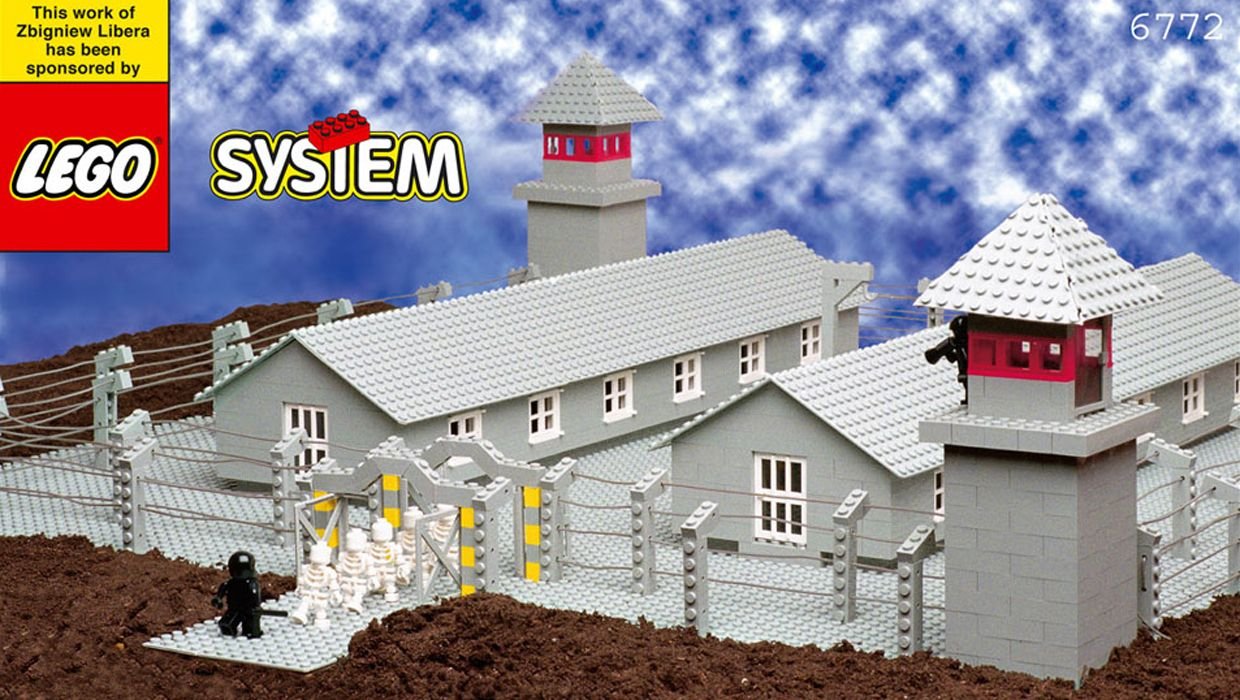
I am of the opinion that LEGO Concentration Camp is an exciting and compelling work. Libera pushed one of the most sacred and taboo subjects—the Holocaust—into a realm that was previously inconceivable: toys and play. He mocked the Nazi regime by diminishing it to a powerless caricature built from small plastic bricks, a brilliant piece of satire, a warning that we must continue to reject the systems that promote apathy, prejudice, and hate. And some 30 years later, his seminal work continues to provoke discourse. It now resides in the permanent collection of the Museum of Modern Art in Warsaw.
Presuming we have the right to dictate what artists create and what art should represent leads to a very dark place. The dramas surrounding LEGO Concentration Camp and The Death of Klinghoffer reflect society’s increasingly dogmatic intolerance of differing points-of-view and unorthodox ideas. The “agree to disagree” notion at the heart of civil discourse has long clung to life support, primarily due to a fervent — and perhaps naive — adherence to the impossible ideals of contemporary political correctness. Individuals remain silent for fear of offending someone. Bullies use social media to shame and humiliate people. And though I may be vilified for saying so, cancel-culture inadvertently enabled the rise of the MAGA movement. Censorship has become a norm––though few seem to notice.
Art isn’t a courtroom handing down verdicts about morality. When a work of art is deemed offensive it does not mean it lacks value and I'm not talking about money. Art invites us to wander, linger, and notice. What catches our eye or stirs our emotions reflects our own inner landscape as much as the work itself. In that space, art becomes a quiet guide, helping us explore who we are through the experience of seeing, feeling, and interpreting. Even when it’s uncomfortable.
Someone once told me that we must turn toward our fears and acknowledge them. Thus begins the tough work of forging discomfort into a superpower, a scaffold of strength on which to free ourselves from the stories imposed on us. There is an opportunity to create new perspectives and engage in more meaningful dialogues which embrace acceptance and healing as well as intolerance and suffering. The only way to find out is to be courageous enough to talk and listen to one another. We need art to help us with our journey along the path of the human condition because it provides a means from which to speak our deepest truths. Art is the doorway to the singular component vital to our very existence—freedom.