Country’s Colorline Pt. 1

I can’t say that I am a fan of country music per se, though I confess to admiring two artists who deeply resonate with me, and I may write about them eventually. Nevertheless, it is difficult to ignore the genre's historical origins in the American South, where my ancestors were enslaved. The Confederate flag, an emblem of violence against African American people still hangs prominently in regions where country music is like oxygen in the blood. Is it possible to appreciate an art form that is symbolized by hatred and racism?
Singers Darius Rucker and Mickey Guyton do not appear to be troubled. Among a handful of Black artists who have found success in contemporary country music, their popularity endures despite the industry’s resistance to fully embracing diversity. This is, ironically, in direct contrast to the invaluable contributions Black people have made to the genre, with some arguing that their influence was crucial to country music’s very inception. Then again, the broader context is rife with contradictions.
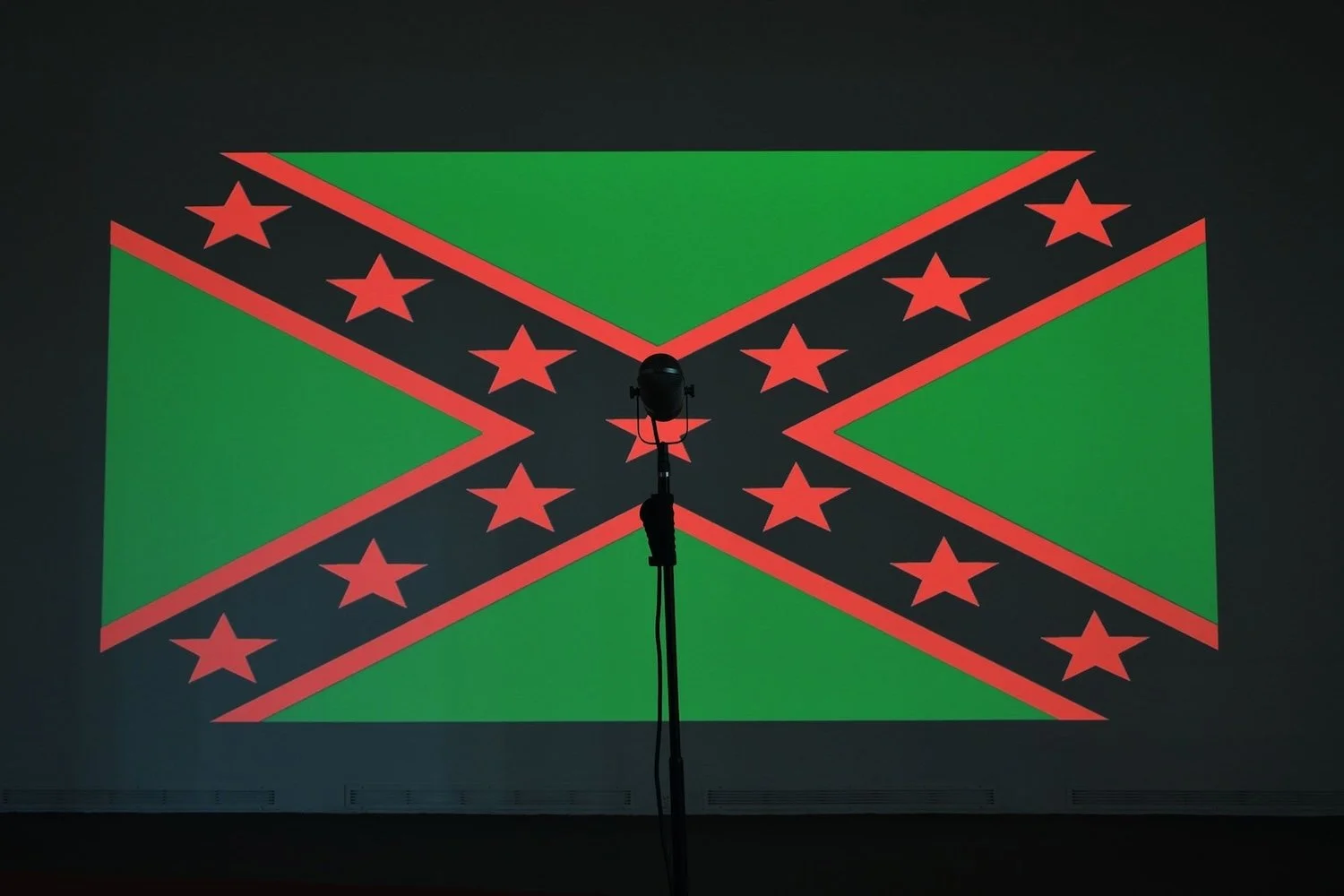
Hank Willis Thomas, Black Righteous Space, 2012
The most glaring example is pop star Beyoncé’s rebranding as a country singer. With the 2024 release of the album Cowboy Carter, she pitched a big ‘ol tent in the country camp, and it paid off, making history at the 2025 Grammys when she won for Best Country Album, the first Black woman to win in the category. In addition, she was awarded the Album of the Year. Four months after her win, the Grammys –– known for its tendency to cave to criticism regarding non-traditional nominees –– announced that starting in 2026, Best Country Album would be split into two categories: Best Contemporary Country Album and Best Traditional Country Album.
Meanwhile, Beyoncé’s winning streak sputtered when the Country Music Association (CMA) Awards—self-anointed guardians of authenticity—barred her from their “genre-specific” nominations. Evidently, being a Texan held no sway, and passing as a country artist requires more than long white hair and a fair complexion.