Country’s Colorline Pt. 2
The CMA’s long-standing history of racism is an open secret; however, on occasion, an unexpected cultural shift forced them to grudgingly admit a Black country artist into its ranks. Singer Charley Pride’s meteoric rise to fame was impossible to ignore. Emerging in the late sixties, country music’s first Black superstar had a triumphant career that culminated in 2000 with Pride’s induction into the Country Music Hall of Fame. Thanks to his enormous popularity with white fans, the CMA sanctioned Pride’s country pedigree with three career wins and, in 1971, the “Entertainer of the Year” award. Then the mood shifted. The hoods and robes came back out, and without explanation, the association ended its fling with the “coloreds.” A thirty-eight–year blackout followed, ending only in 2009 with Darius Rucker’s Best New Artist award.
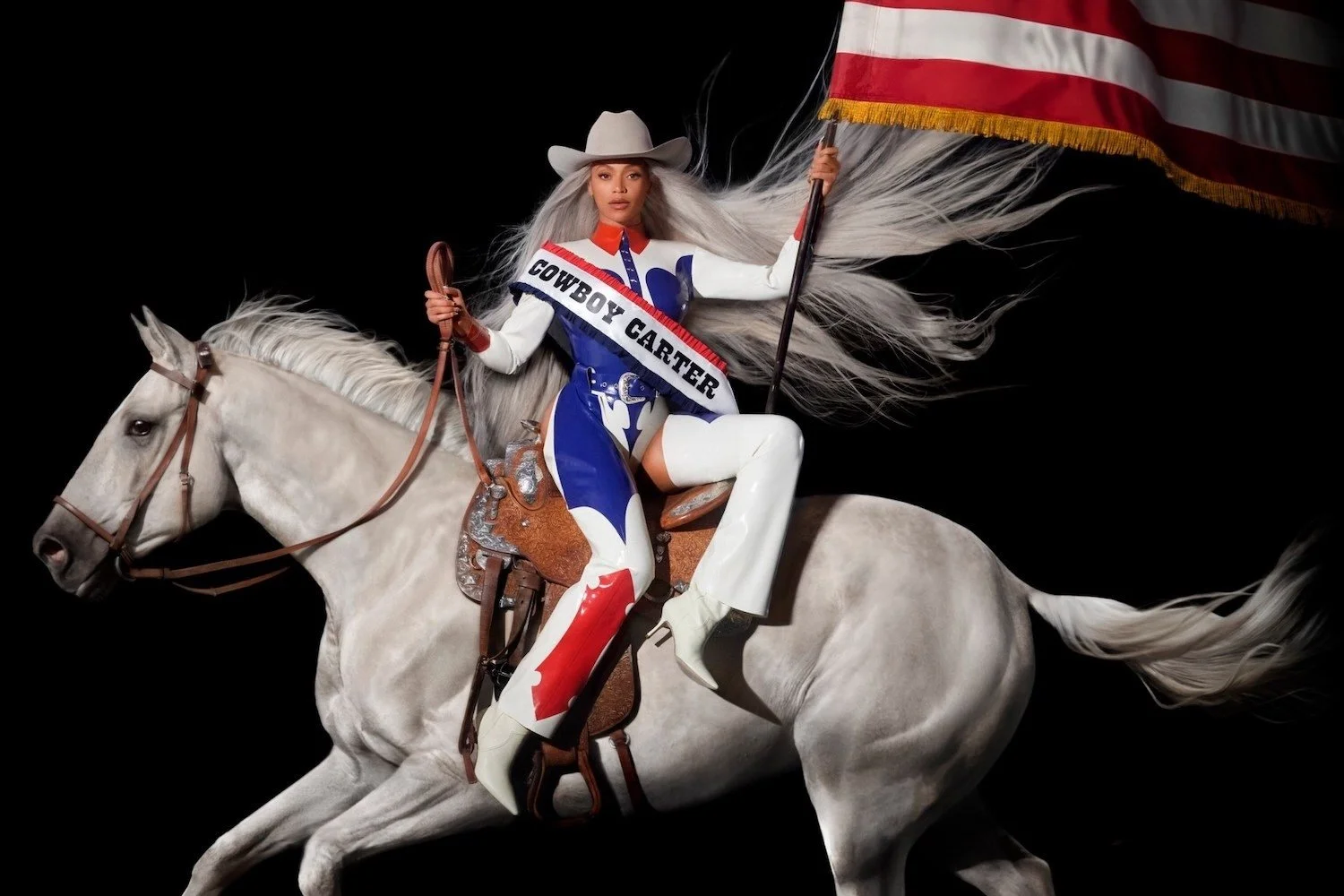
In recent years, Rucker, Kane Brown, Jimmie Allen, and, in a striking turn, the acclaimed singer/songwriter Tracy Chapman have taken home CMA Awards, yet they constitute a tiny fraction of overall winners. Honoring Beyoncé presented an opportunity for meaningful progress in an industry that prioritizes the sanctity of whiteness rather than addressing its racist practices.
Conversely, if Beyoncé believed Cowboy Carter would usher in greater inclusivity in Nashville simply because she’s Queen Bey, then she may not be as savvy as people believe. Responding to the CMA’s decision, she said, “I think sometimes genre is a cold word to keep us in our place as artists.” Her phrase “keep us in our place” unmistakably evokes the language of racial exclusion, making cold feel almost like a misquote or misstatement of code — the more precise term for the bias underlying the CMA’s snub, or what some may perceive as a more blatant expression of racism. Fact-checking confirms she did, in fact, say “cold.” My musings on how Beyoncé’s comment could be interpreted are, of course, purely conjecture. In the end, all I will say is that the definition of an artist is open to individual interpretation.
Therefore, deliberating whether she deserved the CMA’s recognition will drain brain cells I will never get back, which brings me to another outsider who pushed boundaries without being fixated on cosplay. Almost two decades before Beyoncé was born, an exceptional artist shook the foundations of country music's narrow conventions, and, for a fleeting moment, transformed the genre.